


Tailgate Up or Down: Debunking Myths
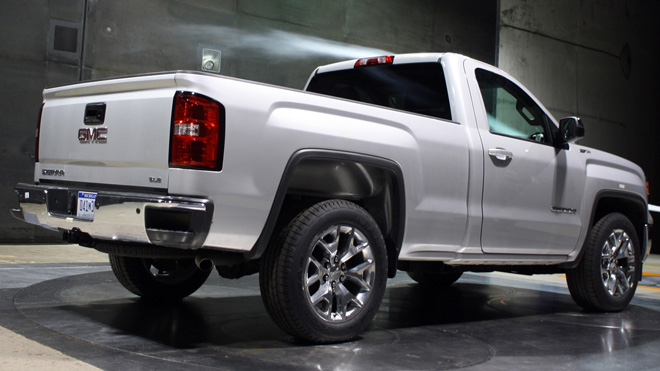 If you’ve ever had the opportunity to own a truck, chances are you’re familiar with the myth that leaving your tailgate down can help save you money.
The idea is that when locked upright, the tailgate creates extra drag on the truck, decreasing gas efficiency. By lowering the tailgate, so the myth says, drivers can decrease drag on their vehicle, thus increasing their gas efficiency and saving cash in the process. But does this myth really hold up?
While regular drivers must rely on anecdotal evidence to support their claims, car manufacturers have studied this problem scientifically in wind tunnels for decades, and the results are resoundingly clear: fuel expenditure is at its lowest when the tailgate is up, in the manufacturer recommended position.
The question at hand is essentially one of aerodynamics, and the science of air resistance. Theorists who claim that lowering the tailgate can help increase fuel efficiency aren’t necessarily wrong in their understanding of the scientific principles involved – when air meets resistance, it does indeed create drag, the mortal enemy of fuel efficiency. But if this is the case, why isn’t the myth true?
Where armchair car enthusiasts fall short is in understanding the function of the truck bed itself. When the tailgate is raised into its normal upright position, an aerodynamic “bubble” forms in and around the truck bed. This bubble is essentially a rotating pocket of air that’s exempted from the lateral wind-flow happening around it. This static pocket creates a buffer, forcing air to flow up and over the truck bed, rather than dropping into it. So, in essence, lateral wind is never slowed down by the tailgate because it doesn’t hit the tailgate in the first place.
When the tailgate is lowered, however, things change. The bubble “breaks,” and air flowing over the truck’s cab drops sharply down into the truck bed. This volatile stream of air diffuses slightly and presses down into the truck bed, increasing drag.

0 comment(s) so far on Tailgate Up or Down: Debunking Myths